
Contact Mace News President
Tony Mace tony@macenews.com
to find a customer- and markets-oriented brand of news coverage with a level of individualized service unique to the industry. A market participant told us he believes he has his own White House correspondent as Mace News provides breaking news and/or audio feeds, stories, savvy analysis, photos and headlines delivered how you want them. And more. And this is important because you won’t get it anywhere else. That’s MICRONEWS. We know how important to you are the short advisories on what’s coming up, whether briefings, statements, unexpected changes in schedules and calendars and anything else that piques our interest.
No matter the area being covered, the reporter is always only a telephone call or message away. We check with you frequently to see how we can improve. Have a question, need to be briefed via video or audio-only on a topic’s state of play, keep us on speed dial. See the list of interest areas we cover elsewhere
on this site.
—
You can have two weeks reduced price no-obligation trial for $199. No self-renewing contracts. Suspend, renew coverage at any time. Stay with a topic like trade while it’s hot and suspend coverage or switch coverage areas when it’s not. We serve customers one by one, 24/7.
—
Tony Mace was the top editorial executive for Market News
International for two decades.
Washington Bureau Chief Denny Gulino had the same title at Market News for 18 years.
Similar experience undergirds our service in Ottawa, London, Brussels and in Asia.

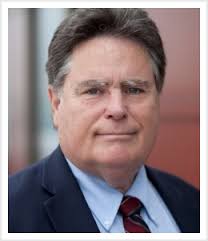
President
Mace News

D.C. Bureau Chief
Mace News
Federal Reserve
Mace News

Reporter and expert on the currency market.
Mace News

Reporter and expert on derivatives and fixed income markets.
Mace News

Financial Journalist
Mace News
Reporter, economic and political news.
Japan and Canada
Mace News
By Max Sato
(MaceNews) – The U.S. services sector revved up sharply in February to extend its expansionary phase into a 20th month as firms have managed to absorb higher costs triggered by stiff import duties imposed under the protectionist U.S. trade policy, indicating a resilient labor market and solid economic growth in the first quarter.
The purchasing managers index for services compiled by the Institute for Supply Management jumped 2.3 percentage points to 56.1, the highest since July 2022 (56.5), after being flat at 53.8 in January and rising 1.4 points December. The February level indicates a 2.5-point increase in total domestic output at an annualized pace, the ISM said.
“The services sector is heating up, with the business activity, new orders, and new export orders indexes at their highest levels since 2024, and the backlog of orders index with its best reading since July 2022,” ISM Services Business Survey Committee Chair Steve Miller said in a statement.
Many firms told the ISM that tariffs impacts have stabilized and are now embedded in supply chain costs, Miller said. “Although there were several comments on tariff uncertainty regarding the U.S. Supreme Court decision, there was no alarm regarding supply chain performance, suggesting that services companies have developed capabilities to routinely address shifts in tariff policies,” he concluded.
Miller told reporters that supply managers should be able to deal with more uncertainties raised by President Trump’s decision to slap new tariffs to replace the existing ones that have been ruled by the Supreme Court to be unlawful, as long as the Congress approves extreme measures like completely cutting off trade with some countries.
Higher import costs particularly hurt the retail, transport/warehousing and whole trade but the overall drag from the tariffs on the services sector is “relatively modest” compared to that on the manufacturing sector, he said.
All of the four sub-indexes that directly factor into the services PMI were in expansion territory for the third month in a row (January figures in parentheses) and all 10 sub-indexes showed expansion for the first time since March 2021.
Business activity 59.9 (57.4) +2.5, the highest since 59.9 in May 2024
New orders 58.6 (53.1) +5.5, the highest since 59.1 in September 2024
Employment 51.8 (50.3) +1.5, the third straight expansion; the highest since 53.9 in February 2025
Supplier deliveries 53.9 (54.2) -0.3, January’s 54.2 was the slowest since 56.4 in October 2024 (above 50 means slower deliveries)
Among other sub-indexes:
Prices 63.0 (66.6) -3.6, the lowest since 60.9 in March 2025 but remains elevated, above 60 for 15 months in a row
Backlog orders 55.9 (44.0) +11.9, the first expansion in 12 months (51.7 in February 2025)
New export orders 57.2 (45.0) +12.2, the highest since 58.5 in July 2024, thanks to the recent depreciation of the dollar, following a 9.2-piont slump in January to the lowest since 43.7 in March 2023, when the European economy was slow.
Asked about a sharp drop in the subindex showing prices paid by services providers in February when the similar prices subindex for the manufacturing sector jumped, Miller replied, “What looks to be the ability of the services sector to keep up with demand … is not driving significant increases in prices.” Backlog orders have been low over the last 12 months while supply deliveries have been “pretty solid around the 50s” except for a sharp slowdown in November 2025 and January 2026, he said.
Looking ahead, Miller said he will watch out for additional cost increases spilling over from the manufacturing sector, such as the prices for high voltage equipment (transformers, circuit breakers, cables, etc.) that is not showing the effects of the U.S. tariffs.
Among cost-released comments from ISM members, a mining firm said, “The combination of tariff exposure and semiconductor market instability is increasing procurement risk, compressing margins, and requiring more aggressive supplier diversification and contractual protections to maintain cost competitiveness.” A retailer said, “Due to random-access memory shortages, we are seeing increased cost and lead times from key technology providers. Quotes that were normally secure for 90 days are now 30 days or less.”
Miller said he is “generally optimistic” about the impact of the Iran war as long as it doesn’t become a “huge” destabilizing factor for supply managers. He does not expect containership chartering rates to double, as seen during the pandemic-caused global supply chain breakdown, but predicted that the Middle East conflict could push up the costs of ocean shipping by 20% to 30%.
On the economic impact of the heightened Middle East conflict after the U.S.-Israeli attacks on Iranian cities and Tehran’s retaliation in the Gulf, Miller said foreign tourism is expected to plunge, hurting the hospitality industry that includes food services, arts and entertainment and airlines. Utilities and wholesalers supporting construction firms overseas will be hit while customers may put large-scale information technology projects on hold in the face of higher global uncertainties, he added.
On the other hand, cyber security service providers are expected to benefit from the conflict while wholesalers serving the aerospace and defense industries are “already seeing a positive impact” and their business could expand further, Miller noted.
–ISM’s Spence: Wouldn’t Be Surprised If Price Pressure Continued in Light of Heightened Tensions in Middle East
By Max Sato
(MaceNews) – U.S. manufacturing activity stayed in expansionary territory in February after springing back to life from a year-long slumber the previous month but firms are blaming the protectionist trade policy under President Donald Trump for surging costs as stiff tariffs on imports are forcing them to procure from more expensive domestic suppliers.
The purchasing managers index compiled by the Institute for Supply Management edged down 0.2 percentage point to 52.4 after jumping 4.7 points to a 41-month high of 52.6 in January on vague optimism about demand recovery in the new year. The February slip was largely due to a pullback in new orders and production, both of which had hit a nearly four-year high in January. The index has been in the positive area only for the third time in 40 months.
Looking at overall sentiment, the February report showed that for every positive comment, there were 2.5 negative comments, little changed from the 1 to 2.3 ratio found in the previous month, according to ISM Manufacturing Business Survey Committee Chair Susan Spence.
Spence told reporters that “we are going to continue to be cautious” about the negative impact of the new tariffs that are replacing those under the International Emergency Economic Powers Act, the use of which by President Trump has been ruled as unlawful by the Supreme Court. The court ruling came just after the ISM had finished gathering information for its February report, she said.
The prices index surged to the highest level in more than three years in February as the Trump tariffs are having a widespread impact on procurement costs. The ISM’s analysis is that the increase reflects a combination of factors, including tariff-related uncertainty, advance supplier price notifications and precautionary pricing behavior.
“We continue to receive price increase notifications from suppliers based on unsupported tariff claims,” a chemical producer told the ISM. A machinery maker also noted, “Due to the tariffs, most raw materials used in manufacturing, such as steel and wire, need to be sourced domestically, and the cost keeps going up.”
A company in the transport equipment industry summed it up by pointing that commodities produced in the United States including steel and aluminum are the highest priced in the world. “Hence, the Section 232 tariff policy is having the exact opposite effect of their intention on an American manufacturer like us: It is raising prices while lowering demand and profitability,” it said.
Asked whether the prices index is likely to continue rising in March in the aftermath of weekend attacks by Israeli and U.S. forces against Iran that Killed its leader, Spence replied, “I wouldn’t be surprised.” She declined to provide energy market forecasts but added, “The question would be is it enough to keep it going even higher and how long will the conflict last.”
Whether a spike in costs or a supply chain disruption is caused by a pandemic, war, bad weather or political factors, Spence said the ISM leadership will continue encouraging member firms “to prepare for the worst- case scenario in planning.”
Spence said her focus is on how higher costs and other factors will affect new orders in coming months, key to a sustained recovery in the manufacturing sector. The employment index has been below the neutral level of 50 since October 2023 because firms continue to focus on accelerating staff reductions due to uncertain near- to mid-term demand, she said.
The five sub-indexes that make up for the PMI (January figures in parentheses):
New orders 55.8 (57.1) -1.3; following a 9.7-poing jump in January to the highest since 59.7 in February 2022
Production 53.5 (55.9) -2.4; following a 5.2% rise in January to the highest since 58.1 in February 2022
Employment 48.8 (48.1) +0.7; after the index gained 3.3 points to hit the highest level since 49.7 in January 2025
Supplier deliveries 55.1 (54.4) +0.7; staying at the highest since 55.2 in April 2025 (above 50 means slower deliveries)
Inventories 48.8 (47.6) +1.2; the highest since 48.9 in August 2025
Among other sub-indexes:
Customers’ inventories 38.8 (38.7) +0.1; after falling 4.6 points in January to the lowest since 35.2 in June 2022
Prices 70.5 (59.0) +11.5; the highest since 78.5 in June 2022
Back in June 2022, the prices index eased further to 78.5 from 82.2 in May, 84.6 in April and a peak of 87.1 in March 2022, when it jumped 11.5 points, following Russia’s invasion of Ukraine on Feb. 24 that sparked concerns about energy and commodities supply from the region.
The ISM report for June 2022 showed that U.S. manufacturing activity growth slowed that month to the lowest rate in two years with softer new orders and record high lead times needed to deliver goods as companies continued to face labor shortages, supply delays, and high prices.
–Japan Expected to Tide Over Impact of Temporary Iranian Blockade of Strait of Hormuz Despite Its Heavy Reliance on Middel East Oil, Gas
By Max Sato
(MaceNews) – Here are the key Japanese events for the coming week. Just as parliamentary debate on the fiscal 2026 budget has shifted to the key budget committee of the House of Representatives, where the ruling coalition holds a vast majority, the government is forced to address resumed energy supply concerns.
Prime Minister Sanae Takaichi faces the biggest challenge of her leadership since taking office in October and subsequent election in the Diet this month after leading her conservative Liberal Democratic Party to a landslide win in general elections.
In response to attacks on Tehran by Israeli and U.S. forces, Iran said it was blocking the Strait of Hormuz, threatening to choke off the key shipping route for oil and gas exports from the Middle East to the world.
Japan is expected to manage this spike in geopolitical risks by seeking alternative supply routes and relying on national efforts by households and businesses to conserve energy consumption, as long as the conflict is temporary and does not spread beyond the region, triggering a worldwide supply chain breakdown.
While Japan relies on the Middle East for more than 90% of its crude oil imports and the bulk of the crude comes through the Strait of Hormuz, it could ask Saudi Arabia, its second largest supplier (in 2025 data), to pump more and ship some out of its Yanbu port on the Red Sea. The United Arab Emirates, which is the largest supplier of crude oil to Japan, could re-route some shipments via its Fujairah port in Oman, bypassing the Mideast Gulf. But there will be competition for this route by other major energy consumers, so Tokyo will be vying for lots at a premium price.
Japan holds sufficient crude oil reserves onshore and offshore to cover 254 days of consumption, with 146 days of stockpiles by the government, 101 days by refineries and seven days in joint reserves with oil producers.
Japan’s main strength for weathering the disruption may be its ability to rouse national solidarity to save energy at all levels, a strategy that was effective during the scheduled blackouts by Tokyo Electric Power Co. (TEPCO) after the Fukushima nuclear power meltdown caused by the earthquake and tsunami in northeastern Japan in March 2011.
All manufacturers, from major breweries to carmakers, cut production, train operators suspended some services, large retail stores and office buildings slashed operating hours and every household tried to minimize power usage. Tokyo and surrounding prefectures served by TEPCO were darker and quieter from early evening onward. The resulting energy savings kept the economy going while all 54 nuclear reactors in the country were shut down after the meltdown. That was significant considering roughly one third of Japan’s power generation was nuclear, with the other two-thirds from hydro and fossil fuels (about 30% each).
Now Japan is more vulnerable to disrupted fossil fuel supply. Thermal power generation (by natural gas, coal and crude oil) now accounts for about 70% of total power generation and the share of nuclear power is only about 10%, with renewable energy including solar and hydro about 20%.
But since the national solidarity campaign of 2011, there has been a marked shift in the general attitude, with people feeling less inclined to unite in emergencies. The late PM Shinzo Abe, during his second premiership from 2012 to 2020, seemed to worsen the division with verbal attacks on certain groups in society. With the impact of social media misinformation, recent national election results have shown many people are easily swayed by populist slogans. But voters in the last election lined up behind Takaichi, showing they were less concerned about ideology and more concerned about who could lead them.
For the coming week, the economic data calendar is light. The jobless rate is expected to remain low and stable at 2.6% in January. Payrolls have continued growing from year-earlier levels for over three years.
The focus is on whether the number of unemployed has risen on year for a sixth straight month. In December 2025, it rose by 120,000 from a year before but the number was at a 10-month low at an unadjusted 1.66 million, down from 1.71 million the previous month. In December 2024, it dipped 20,000 for the fifth straight year-on-year drop to a pre-pandemic level of 1.54 million, which was the lowest since 1.46 million in December 2019 (it was 1.60 million in January 2020).
– Monday, March 2
1030 JST (0130 GMT Monday, March 2/2030 EST Sunday, March 1) Bank of Japan Deputy Governor Ryozo Himino, a former Financial Services Agency commissioner, speaks to business leaders in Wakayama, western Japan.
Himino is expected to repeat the official line that the central bank will continue raising rates if growth and inflation evolve in line with its medium-term outlook, noting that real interest rates are at “significantly low levels.”
At its latest policy meeting on Jan. 22-23, the BOJ’s nine-member board decided in an 8 to 1 vote to leave the target for the overnight interest at 0.75% after conducting its first rate hike in six meetings in December by raising it by 25 basis points (0.25 percentage point) to a 30-year high. The no change in policy was expected as the bank stays the course of lifting the policy rate only gradually toward a more neutral level of at least 1%.
Board member Hajime Takata, formerly with Mizuho Securities, called for a back-to-back rate increase to 1.0%, arguing that the bank’s 2% inflation target has been “largely achieved” and that there are “high upside risks” to domestic inflation as other economies are entering a recovery phase. Takata and his colleague Naoki Tamura, who came from the Sumitomo Mitsui banking group, were advocates for an earlier rate hike before December.
In the December rate hike statement, the bank stressed that real interest rates would remain “significantly negative” and thus that accommodative monetary conditions should continue and support economic activities.
– Monday, March 2
1400 JST (0500 GMT/0000 EST Monday, March 2) BOJ Deputy Governor Himino holds a news conference in Wakayama.
– Tuesday, March 3
0830 JST (2330 GMT/1830 EST Monday, March 2) The Ministry of Internal Affairs and Communications releases the January unemployment rate.
Mace News median: 2.6% (range: 2.5% to 2.6%) vs. 2.6% in the previous five months, over 5-year low of 2.3% in July, 2.5% from March to June
Japanese payrolls are expected to post a 42nd straight year-on-year increase in January as many firms are seeking to secure qualified workers, particularly at hospitals, hotels, restaurants and technical service providers. Manufacturers and the wholesale/retail sector continue shedding their workforces, although both industries are big employers, each holding more than 10 million workers on their payrolls and together accounting for 30% of the total number of employed people.
The seasonally adjusted unemployment rate is forecast to remain stable at 2.6% after being flat in the previous four months, rising to the current level in August and hitting a more than five-year low of 2.3% in July.
The jobless rate averaged 2.5% in 2025 (vs. 2.5% in 2024 and 2.6% in 2023) after moving moved in a tight 2.3% to 2.6% range. The 2.3% rate in July is the lowest since 2.2% recorded in December 2019 in the early phase of the pandemic.
The government continues to describe employment conditions as “showing signs of improvement” in its latest monthly economic report for February, unchanged since the last upgrade in June 2023.
– Tuesday, March 3
0850 JST (2350 GMT/1850 EST Monday, March 2) The Ministry of Finance releases Q4 Financial Statements Statistics of Corporations by Industry, key to calculating revisions to October-December GDP due March 10.
Economists will use demand side business investment figures and inventories in the MOF survey to predict revisions to the Q4 GDP data. The preliminary data released on Feb. 16 showed that Japan’s economic growth in the final quarter of 2025 was nearly flat, up just 0.1% on quarter (0.053% to be more precise), or 0.2% (0.21%) annualized, coming in much weaker than expected as a rebound in business investment turned out to be tepid, public works spending fell more sharply than estimated and stiff U.S. tariffs choked exports of autos, metals and computer chips.
Private consumption, which accounts for about 55% of the GDP, remains sluggish in the face of elevated costs for daily necessities and falling real wages, with its resilience fizzling out toward the end of the year when bad winter weather hampered economic activity. The Q4 growth barely made up for the degree of the economy’s first contraction in six quarters in Q3, when it shrank a downwardly revised 0.7% q/q (2.6% annualized).
Domestic demand made virtually no contribution (+0.04 percentage point) to total domestic output, far below the positive 0.4 point anticipated by economists, while external demand as measured by net exports (exports minus imports) failed to lift the Q4 GDP very much, providing zero contribution (+0.02 point). Private consumption added just 0.1 (0.06) point and capex also disappointed with zero contribution (+0.04 point).
– Tuesday, March 3
1300 JST (0400 GMT Tuesday, March 3/2300 EST Monday, March 2) Bank of Japan Governor Kazuo Ueda delivers a brief 15-minute speech on “the new financial ecosystem and the role of central banks” at FIN/SUM2026, a fintech conference on “the new financial ecosystem shaped by AI and blockchain” jointly hosted by the Nikkei media group and the government watchdog Financial Services Agency.
– Wednesday, March 4
1400 JST (0500 GMT/0000 EST Wednesday, March 4) The Cabinet Office releases the February consumer confidence survey. The confidence index rose a seasonally adjusted 0.7 percentage point on the month to 37.9 in January to hit the highest level since April 2024 (38.2) after falling 0.3 point in December for the first drop in five months. The Cabinet Office maintained its assessment that consumer confidence as “picking up.”
– Friday, March 6
1400 JST (0500 GMT/0000 EST Friday, March 6) The Bank of Japan releases the January supply-side consumption activity index, which has a close correlation to the revised series of gross domestic product. It will indicate how private consumption kicked off the year after ending 2025 in a weak tone.
The index dipped a seasonally adjusted 0.4% in December after rising 0.4% in November and falling 0.6% in October, resulting in a 0.2% slip on quarter in the final three months of 2025 after rising 0.6% in the previous quarter. Figures exclude inbound tourism consumption but include outbound tourism spending.
By Steven K. Beckner (MaceNews) – Few Federal Reserve officials have completely foreclosed the possibility of resuming interest rate reductions at some point, but for
for release: Friday, Feb. 27, 2026 0830 JST (2330 GMT/1830 EST Thursday, Feb. 26) The Ministry of Internal Affairs and Communications releases February Tokyo CPI.
–Cabinet Office Keeps View After October Upgrade: Orders Showing Signs of Pickup –Official: December Rise After November’s 11.0% Dip Indicates Trend Not Strong Enough to
Friday, Feb. 20, 2026 0830 JST (2330 GMT/1830 EST Thursday, Feb. 19) The Ministry of Internal Affairs and Communications releases January CPI.Mace News median: total
Thursday, Feb. 19, 20260850 JST (2350 GMT/1850 EST Wednesday, Feb. 18) The Cabinet Office releases December machinery orders.Mace News median: core orders +3.2% m/m (range:
–Updates with Official Remarks at Briefing, Background –IMF: BOJ Policy Interest Rate Below Estimated Neutral Rate, Echoing Recent Comments of BOJ Governor Ueda –IMF: Continued
–Investors Favor Eurozone, EM Markets over U.S. By Vicki Schmelzer NEW YORK (MaceNews) – Global fund managers remained “uber-bullish” in February, according to the latest
Wednesday, Feb. 18, 20260850 JST (2350 GMT/1850 EST Tuesday, Feb. 17) The Ministry of Finance releases January trade.Mace News survey median: exports +11.9% y/y (range:
Contact Mace News President
Tony Mace tony@macenews.com
to find a customer- and markets-oriented brand of news coverage with a level of individualized service unique to the industry. A market participant told us he believes he has his own White House correspondent as Mace News provides breaking news and/or audio feeds, stories, savvy analysis, photos and headlines delivered how you want them. And more. And this is important because you won’t get it anywhere else. That’s MICRONEWS. We know how important to you are the short advisories on what’s coming up, whether briefings, statements, unexpected changes in schedules and calendars and anything else that piques our interest.
No matter the area being covered, the reporter is always only a telephone call or message away. We check with you frequently to see how we can improve. Have a question, need to be briefed via video or audio-only on a topic’s state of play, keep us on speed dial. See the list of interest areas we cover elsewhere
on this site.
—
You can have two weeks reduced price no-obligation trial for $199. No self-renewing contracts. Suspend, renew coverage at any time. Stay with a topic like trade while its hot and suspend coverage or switch coverage areas when it’s not. We serve customers one by one 24/7.
—
Tony Mace was the top editorial executive for Market News International for two decades.
Washington Bureau Chief Denny Gulino had the same title at Market News for 18 years.
Similar experience undergirds our service in Ottawa, London, Brussels and in Asia.