
Contact Mace News President
Tony Mace tony@macenews.com
to find a customer- and markets-oriented brand of news coverage with a level of individualized service unique to the industry. A market participant told us he believes he has his own White House correspondent as Mace News provides breaking news and/or audio feeds, stories, savvy analysis, photos and headlines delivered how you want them. And more. And this is important because you won’t get it anywhere else. That’s MICRONEWS. We know how important to you are the short advisories on what’s coming up, whether briefings, statements, unexpected changes in schedules and calendars and anything else that piques our interest.
No matter the area being covered, the reporter is always only a telephone call or message away. We check with you frequently to see how we can improve. Have a question, need to be briefed via video or audio-only on a topic’s state of play, keep us on speed dial. See the list of interest areas we cover elsewhere
on this site.
—
You can have two weeks reduced price no-obligation trial for $199. No self-renewing contracts. Suspend, renew coverage at any time. Stay with a topic like trade while it’s hot and suspend coverage or switch coverage areas when it’s not. We serve customers one by one, 24/7.
—
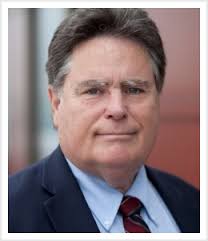
Tony Mace was the top editorial executive for Market News
International for two decades.
Washington Bureau Chief Denny Gulino had the same title at Market News for 18 years.
Similar experience undergirds our service in Ottawa, London, Brussels and in Asia.

President
Mace News

D.C. Bureau Chief
Mace News
Federal Reserve
Mace News

Reporter and expert on the currency market.
Mace News

Reporter and expert on derivatives and fixed income markets.
Mace News
Financial Journalist
Mace News

Reporter, economic and political news.
Japan and Canada
Mace News
Thursday, August 13, 2026
0850 JST (2350 GMT/1950 EDT Wednesday, August 12) The Bank of Japan releases the July corporate goods price index.
Mace News median: CGPI +7.5% y/y (range: +6.6% to +7.5%) vs. June +7.1%; +0.6% m/m (range: -0.5% to +0.6%) vs. June +0.4%
By Chikafumi Hodo
TOKYO (MaceNews) – Japan’s annual producer inflation, as measured by the corporate goods price index (CGPI), is expected to accelerate in July to its fastest pace since February 2023. The CGPI is forecast to rise for a fifth consecutive month from a year earlier, driven by continued increases in oil, metals and other commodity prices.
Ongoing geopolitical tensions in the Middle East have kept oil and commodity prices elevated while also boosting safe-haven demand for the dollar, leaving it about 7% stronger against the yen than a year earlier. The resulting depreciation of the Japanese currency has pushed up import costs in resource-poor Japan. These trends have intensified since the U.S. and Israel launched a joint military strike on Iran in late February.
In addition, businesses have continued to pass on higher labor costs to customers, adding to upward pressure on producer prices.
The CGPI is expected to rise 7.5% year on year in July—the fastest pace since February 2023, when it increased 8.4%—following a 7.1% gain in June. The largest contributors to the increase in June were non-ferrous metals, which rose 39.2% from a year earlier, petroleum and coal products (22.8%), and chemical products (14.4%).
On a month-on-month basis, producer prices are expected to rise 0.6% in July. Except for February, when the index was unchanged, the monthly CGPI has posted positive growth every month since September 2025. June’s monthly increase was driven mainly by petroleum and coal products, including heavy fuel oil and kerosene, as well as utilities and plastic products. Declines in agricultural products, including rice and pork, partially offset those gains.
By Max Sato
(MaceNews) – Upward pressures on both producer and consumer prices are mounting in Japan when only about five years ago policymakers dreamt about seeing the annual inflation rate overshoot the Bank of Japan’s 2% target from around zero.
When BOJ board members left the policy interest rate unchanged at 1% at the end of July to assess the effects of their June rate hike, they repeated their warning that the risks to inflation remain skewed to the upside. They didn’t single out the yen’s weakness but it has been driving up import costs at a time when firms are raising wages and passing higher labor and production costs on to consumers, a phenomenon that policymakers wished to see as a sign of a sustainable growth cycle.
“As for underlying CPI inflation, there is a risk that it will deviate upward to a level above the price stability target of 2%, given factors such as firms’ behavior shifting more toward raising wages and prices and medium- to long-term inflation expectations continuing to rise,” the board said in its quarterly Outlook Report released after their July 30-31 meeting. “It is necessary to pay due attention to keep such a risk from materializing and thereby exerting an adverse impact on the economy afterward.”
Economists expect the BOJ to conduct its sixth interest rate hike in the current normalization process in October, when the board updates its medium-term growth and inflation projections with risk analysis in the Outlook Report, or by the end of the year at the latest.
But given growing domestic upside risks to inflation and hints from the U.S. Treasury Department that Washington would be happier to see a faster pace of BOJ rate hikes to a more neutral level, some are looking at the possibility that the BOJ may act earlier at the Sept. 17-18 meeting. A rare joint dollar-selling market intervention by the Japanese and U.S. governments late last month also left the impression that the two allies are serious about correcting the yen’s depreciation to the level unseen in nearly four decades and that while Prime Minister Sanae Takaichi is not a big fan of the BOJ’s rate hike drive, Treasury Secretary Scott Bessent seems to be setting the stage for the BOJ to raise rates and help slow the pace of the yen’s fall.
The dollar was quoted at around ¥158.50 on Friday, up from a recent low of ¥157.20 hit on July 31, when the joint intervention pushed the U.S. currency down from around ¥160. Given that the yen’s appreciation from ¥163 seen before the MOF’s suspected dollar-selling operations on July 30 can be short-lived, Finance Minister Satsuki Katayama warned dollar bulls by saying in her Aug. 3 statement that Tokyo and Washington “will not hesitate to conduct further joint intervention.”
Prime Minister Takaichi’s plans to boost fiscal spending and temporarily reduce the 10% sales tax to zero have stoked fears in the bond markets that the government would have to issue more debt in the absence of a clear picture of how to fund those measures, resulting in higher yields on long-term bonds. Treasury officials are concerned about negative spillover effects on the U.S. economy.
In the latest government report, Japan’s consumer inflation accelerated slightly in June due to a smaller drop in gasoline prices and larger markups in other fuels, which limited the impact of a continued moderation in processed food markups.
All three key CPI measures remain below the BOJ’s 2% target, thanks to fuel subsides since mid-March and free high school education that took effect in April, both of which are partly offsetting the impact of rising costs of imports due to the weak yen, labor amid widespread worker shortages and transportation and packaging triggered by the Iran war.
The year-on-year increase in the core CPI (excluding fresh food) accelerated to 1.6% after being unchanged at 1.4% in May and decelerating sharply to a four-year low of 1.4% in April from 1.8% in Mach.
For a clearer trend in consumer inflation, BOJ officials are closely watching the bank’s own core measures that exclude the effects of institutional factors (sales tax cuts, energy subsidies, etc.), which are pointing to an uptrend in underlying inflation above the bank’s 2% target.
The BOJ’s core CPI (excluding fresh food and institutional factors) rose 2.7% on the year in June after the annual rate eased to 2.7% in May from 2.8% in April. The institutional factors are: the effects of sales tax rate changes, free education, fuel and utility subsidies, reduction in mobile phone charges in 2021 and travel subsidy programs during the pandemic.
The BOJ’s another core measure, the CPI minus fresh food, energy and institutional factors, continued to slow to a 2.0% increase in June from 2.1% in May and 2.2% in April. The annual rate of the government’s core-core CPI (excluding fresh food and energy) stood at 1.7%, easing further from 1.8% in May and 1.9% in April.
Looking at the upstream inflation, producer prices are forecast to show a higher 7.5% annual rate of increase in July, up from 7.1% in June, as the lingering Mideast conflict has kept energy and transportation costs elevated, global memory chip shortages have boosted the prices for electronic goods and the weak yen has pushed up import costs further.
Monday, Aug. 10
0850 JST (2350 GMT/1950 EDT Sunday, Aug. 9) The Bank of Japan releases the summary of opinions from the July 30-31 meeting.
At the meeting, the BOJ’s nine-member board decided to leave the target for the overnight interest rate at 1% in an 8 to 1 vote (one member called for a hike to 1.25%) as the bank is still monitoring the impact of its fifth hike in the current cycle that was conducted in June. The board again vowed to “continue to raise the policy interest rate and adjust the degree of monetary accommodation” in response to developments in growth and inflation. Underlying inflation is nearing the bank’s 2% price stability target and financial conditions are accommodative, it noted.
Monday, Aug. 10
1400 JST (0500 GMT/0100 EDT Sunday, Aug. 9) The Cabinet Office releases the July Economy Watchers’ Survey, which was conducted from July 25 to July 31. The focus is on how the on-and-off U.S.-Iran ceasefire affected sentiment. The deadly 7.1-magnitude earthquake that shook Kumamoto Prefecture in southwestern Japa on July 28 is also a damper on regional economic activity and could cause a supply chain disruption on a national level for some industries.
The June report indicated that confidence continued to improve, thanks to easing in Mideast tensions at the time as well as robust spending by visitors from overseas who have been taking advantage of the weak yen and by affluent domestic consumers amid rising stock prices. There is also solid demand for semiconductors and air conditioners.
The Watchers’ sentiment index showing the direction of Japan’s current economic climate rose slightly to a four-month high of 44.0 in June on a seasonally adjusted basis, posting the second straight rise after rising to 43.6 in May from 40.8% in April. Before the impact of the Iran war emerged, the index climbed to a nearly two-year high of 48.9 in February from 47.6 in January. The last time the index was above the neutral line of 50 was in March 2024, when it was at 50.1.
The Watchers’ outlook index, which shows sentiment in two to three months, marked the third straight increase, rising to 45.7 in June from 40.7 in May and 39.4 in April. The index started the year at 50.1 before slipping to 50.0 in February and plunging to 38.7 in March.
Thursday, Aug. 13
0850 JST (2350 GMT/1950 EDT Wednesday, Aug. 12) The Bank of Japan releases the July corporate goods price index (CGPI).
Mace News median: CGPI +7.5% y/y (range: +6.6% to +7.5%) vs. June +7.1%; +0.6% m/m (range: -0.5% to +0.6%) vs. June +0.4%
Producer inflation in Japan is expected to continue accelerating to 7.5% in July from 7.1% in June as the lingering Mideast conflict kept energy and transportation costs elevated, global memory chip shortages boosted the prices for electronic goods and the weak yen pushed up import costs further.
Japan has increased purchases of crude oil and naphtha, the key material for producing plastics and resins, from the United States and other countries to bypass the Mideast Gulf. This has helped bring the month-on-month increase in the CGPI to a slower pace of 0.4% in June from 1.1% in May and 2.8% in April. The median forecast for July is a 0.6% rise. The 0.4% increase in June was led by fuels, utilities, wood and rubber products as well as building materials, indicating that the impact of domestic naphtha shortages had lingered.
– Some Ready To Tighten; Others Hoping for More Disinflation Evidence
– Alternative Policy Scenarios for Curbing Inflation Being Assessed
By Steven K. Beckner
(MaceNews) – The week after a hotly debated Federal Open Market Committee decision to hold short-term interest rates steady has brought comments from multiple Federal Reserve officials suggesting that the Fed’s policymaking body could be primed to raise rates before long unless inflation continues to trend lower.
While some officials sound ready to raise the federal funds rate at the FOMC’s mid-September meeting, others may take more convincing. All will be closely examining the inflation and other data that will be coming between now and then.
As last Wednesday’s 9-3 FOMC vote suggests, Fed officials diverge on how best to proceed, but in their comments since then, they agree that the Fed’s main priority must be to bring down inflation to the central bank’s 2% target.
As New York Federal Reserve Bank President John Williams put it Monday, “There’s a debate about how do we best achieve our goals, but there’s absolutely no debate about the importance of achieving maximum employment and price stability.”
Williams led off a parade of Fed officials this week in declaiming on their monetary policy viewpoints after a divided FOMC left the federal funds rate unchanged for its fifth straight meeting.
The FOMC vice chairman, who voted with the majority to leave the funds rate where it is for another six weeks, repeated his familiar refrain about policy currently being “well-positioned,” but he seemed to add an edge to his comments to Reuters by saying, “It would absolutely be appropriate to act” if inflation doesn’t get “on a trajectory that does bring inflation back to 2%.”
Fed Governor Lisa Cook voted to hold rates steady, but served notice Wednesday that she’s ready to raise them “if (she does) not see signs of continued disinflation soon.”
Philadelphia Fed President Anna Paulson, who also voted to keep the funds rate unchanged, stopped well short of calling outright for higher rates Tuesday, but warned that if inflation remains “stubbornly elevated,” such a lack of progress would mean “more restrictive policy is needed.”
Minneapolis Fed President Neel Kashkari, one of three Fed presidents who dissented in favor of higher rates, not surprisingly called again for immediate tightening Wednesday.
An assortment of non-voters offered various degrees of conditional support for higher rates if inflation fails to moderate. Some were more reticent than others.
Most recently, St. Louis Fed President Alberto Musalem said Thursday evening that it is “crucial” for the Fed to put “meaningful restraint” on inflation and seemed to overtly contradict new Fed Chairman Kevin Warsh’s belief that lower interest rates to encourage productvity gains can lower inflation in the long run.
That “would be a mistake,” he asserted.
Kansas City Federal Reserve Bank President Jeffrey Schmid was more bluntly hawkish Tuesday night, declaring that “bringing inflation down to the Fed’s 2% objective will require tighter policy.”
Others are taking a wait-and-see, alternative scenarios approach, but say they’re prepared to tighten if a more unfavorable inflation scenario plays out.
San Francisco Fed President Mary Daly adopted a relatively neutral approach Wednesday, cautioning that there is “a lot of information” to come before the FOMC has to make a rate decision at its Sept. 15-16 meeting.
This week’s Fed official commentary came on the heels of comments last Friday from three Federal Reserve Bank presidents who voted against the FOMC’s July 29 decision to keep the funds rate in a 3.5% to 3.75% target range.
The three Fed presidents – Minneapolis’s Kashkari plus Cleveland’s Beth Hammack and Dallas’s Lorie Logan — dissented because they “preferred to raise the target range for the federal funds rate by 1/4 percentage point at this meeting” according to the FOMC.
In separate statements, the three contended the FOMC needed to take more urgent action to return inflation to the Fed’s 2% target, given that the economy and labor markets are “solid” enough to withstand some monetary tightening.
By raising rates modestly now, the FOMC could avoid the potential need to tighten more aggressively down the road, Logan and Kashkari wrote.
In a succinct policy statement the FOMC acknowledged that “inflation remains elevated relative to the Committee’s 2% goal, in part reflecting supply shocks that have driven price increases in certain sectors, including energy.” It again declared that the Fed “will deliver price stability.”
Talking about the decision in his second post-FOMC press conference, Warsh downplayed the three dissents as nothing but “a good family fight.” He denied the FOMC’s inaction signified any kind of “inertia.” Nor is the FOMC in “a pause,” as one reporter alleged, he asserted.
Rather, “I would characterize what we did as a rigorous review of the economic situation,” he said. “I would characterize what we did as a review of the big, hard questions, and I’d characterize it as a view of what our own homework is, to try to resolve those questions and the period ahead.”
Warsh, who took office May 22, claimed the bond market had accepted the FOMC’s vow to “deliver” price stability by driving up yields, thereby helping the Fed accomplish that goal. “Financial market prices, in this intervening period, they didn’t pause. They reacted to the inflation data in one direction, strong economic growth in the other direction, and nominal and real rates went up.”
The Fed chief implied that the FOMC won’t hesitate to raise rates if inflation trends don’t improve soon. “Did the Fed take an explicit change in its policy rate today? No, but I think that’s the beginning of the story, not the end of the story.“
Comments from other Fed officials this week suggested, on balance, that Warsh would have little trouble mustering a majority for tightening monetary policy – provided inflation risks remain to the upside in the context of strong economic growth and low unemployment.
Leading off Monday, Williams expressed hope that “underlying disinflationary trends (will) continue” and, as he has many time before, said, “Monetary policy currently is well positioned in where we are today to support that disinflationary path.”
However, he warned, “]f the economy is not on a trajectory that will bring inflation back down to 2% . . . . It would absolutely be appropriate to act to get us on a trajectory that does bring inflation back to 2%.”
The FOMC vice chairman, known for expressing a mainstream perspective most of the time, said the FOMC is “laser focused” on lowering inflation to 2%.
Gov. Cook said Wednesday that she did not think it “appropriate” to raise rates last week because of uncertainty about tariff, energy and AI inflationary forces, but suggested it would not take much for her to vote for higher rates.
“Inflation is too high, and I consider the risks to the inflation side of the dual mandate higher than the risks to the employment side at this point,” she said. “As such, I am prepared to act by raising rates, if necessary.”
Noting that “labor market and output growth are currently stable.” Cook told an Anchorage, Alaska Economic Development Corporation luncheon she “would consider how a rate increase could negatively affect that stability.”
But she said she “still … would support an increase, if it becomes necessary to bring inflation down.”
“It may not,” Cook continued. “Some disinflationary forces are already in play, which could push inflation toward our target without a rate increase.” For example, she said tariff effects are “mostly behind us.” What’s more, there is hope that energy costs will decline and provide “some deflationary relief.”
Finally, she said she believes some of the demand pressures on goods prices stemming from AI investment “will ease.”
But Cook, whom President Trump has been trying to fire, emphasized that “uncertainty remains high” about these “disinflationary forces,” which is why she said she was willing to stand pat last week.
But, she declared, “If I do not see signs of continued disinflation soon, I am prepared to act. With five years of above-target inflation, the risk grows that higher inflation may become entrenched in price- and wage-setting behavior, leading to persistence that would be much harder for us to attack.”
“The longer inflation is above target, the more likely this scenario becomes,” she went on. “Thus, while we might be able to afford to wait for longer in a different environment, we do not have that luxury in this one.”
Paulson, another 2026 voter, offered “two plausible scenarios” Tuesday, one in which “too high” inflation recedes, another in which it persists. But she seemed to put more emphasis on the latter.
Inflation could moderate, but “if instead underlying inflation remains stubbornly elevated, the passage of time without progress would itself signal that more restrictive policy is needed,” she said in an essay released by the Philadelphia Fed titled “Keeping an Open Mind.”
Paulson wrote that she “supported” the FOMC’s decision to stay on hold and welcomed the “recent improvement in some inflation data” as “somewhat encouraging” and “a step in the right direction.” But she added, “it is only one step” and said she needs to “more information” to confirm that favorable trends continue.
On a hopeful note, she said, “the brief period of Middle East stability demonstrated that supply shocks can be temporary, reinforcing the case for looking through such disruptions when setting monetary policy.” And she observed that inflation expectations “remain well-anchored.”
But even allowing for energy and tariff-related price increases, Paulson estimated that “underlying inflation” is running “somewhere between 2.4 and 2.8%” and “has been elevated for a long time.”
This long period of above-target inflation is “what I am most focused,” she added, after suggesting the labor market is a non-issue for the FOMC.
Paulson identified two contrary monetary policy scenarios.
“One possibility is that the current setting of the federal funds rate is mildly restrictive and this will bring inflation to 2% in an acceptable time frame,” she said.
“The other possibility, however, is that current policy is not restrictive enough to deliver our target rate of 2% inflation.”
“The most compelling evidence for this view is straightforward: Inflation has been above target for more than five years and even stripping out temporary factors, measures of underlying inflation have edged down only modestly over the past year or so,” Paulson continued. “Persistently elevated inflation suggests more restrictive policy may be needed.”
She said she is “keeping an open mind about where policy goes from here” and said she will “assess” the appropriate policy path “by watching how the evidence accumulates.”
“If policy is appropriately calibrated, I would expect to see growing signs that inflation is coming down – more months of improving inflation data; reports from those making pricing and hiring decisions that align with a gradual return to 2%; signs that pressures from tariffs, energy, and AI are contained rather than intensifying; and inflation expectations that are well-anchored and consistent with 2%,” she said.
“If instead underlying inflation remains stubbornly elevated, the passage of time without progress would itself signal that more restrictive policy is needed,” Paulson concluded.
Some non-voting Fed presidents have also indicated varying degrees of willingness to tighten.
Schmid was even more outspokenly hawkish than Paulson Tuesday evening, flatly asserting, “I believe that bringing inflation down to the Fed’s 2% objective will require tighter policy.”
With the labor market “in balance” and the economy “performing well,” he told as Kansas City Fed agriculture summit audience, “inflation is my primary concern.”
Schmid conceded June price indices showed improvement, but was distrustful. “Inflation has been too high for too long. Though the most recent inflation data for June showed an encouraging deceleration, it would be premature to put too much weight on a single data point relative to recent trends…”
“Our inflation problem is not only about energy,” he said. “Measures of inflation that exclude energy are still running solidly above 2%, revealing an underlying trend in the data. This trend has not been our friend.”
Schmid said “inflation above target implies that there is an imbalance” between supply and demand and said it is the Fed’s job to curb demand even if “supply shocks” may contribute to price pressure.
“A focus on supply shocks often represents an implicit assumption that the factors pushing up inflation are temporary or transitory,” he said, but, “I am uncomfortable ever assuming that a burst of inflation will be temporary.”
So Schmid came down squarely in favor of rate hikes: “ Given the strength of demand and investment, I do not see the current stance of monetary policy as restrictive. As such, I believe that bringing inflation down to the Fed’s 2 percent objective will require tighter policy.”
Daly is not usually considered to be particularly“dovish,” but she sounded far less eager to tighten Wednesday night.
She said she was “completely supportive” of the FOMC’s decision to hold the funds rate steady,
What’s more, she gave no indication she is leaning in one direction or another with the mid-September meeting still five weeks off.
“We have a lot of information we need to collect” before the September 15-18 FOMC meeting to properly assess whether or not inflation accelerated primarily due to passing “supply shocks” or whether more worrisome, underlying forces are at work, Daly said at the Economic and Social Research Institute (ESRI) International Conference in Tokyo.
“There are good reasons to believe inflation will receded as tariff and energy shocks wane, she said, but added that Fed policymakers need to be “vigilant to watch the information as it comes in” and to “be very prepared to take action” if disinflation doesn’t resume.
Musalem indicated he would like to tighten monetary policy as soon as possible in a Thursday evening speech in Sao Paulo, Brazil as he came down heavily on the side of fighting inflation and warned against relying on hoped-for productivity growth to curb inflation.
Given the “resilient” economy and the “stabilized” labor market, and given inflation “well above” the 2% target, he said “the balance of risks is tilted toward inflation remaining above target a year or more from now.”
“Against this backdrop, it is crucial that monetary policy put a meaningful restraint on underlying inflation, rather than tolerating somewhat higher inflation today to pursue productivity growth tomorrow,” Musalem said.
Warsh is well-known for extolling the idea that faster productivity growth can be anti-inflationary and that, therefore, interest rates should be low enough to incentivize productvity-increasing capital investment.
But, without directly mentioning Warsh, Musalem disputed that contention, warning that too easy monetary policy can instead have adverse effects.
“In my view, setting monetary policy easier than conditions would otherwise warrant in pursuit of higher growth would be a mistake,” he told the Brazilian Center for Public Policy Debate. “The size of the eventual productivity gains is highly uncertain, and the argument in favor of easier policy takes for granted the credibility of monetary policy.”
Citing the Warshian hypothesis, Musalem mused, “Perhaps, then, the prize of even slightly faster growth is worth running some inflation risk to claim it.”
But he added, “The trouble is that this reasoning takes the central bank’s credibility for granted. The bargain only works because households, firms and investors keep expecting inflation to return to target.”
Low inflation expectations are “what keeps borrowing costs, wage demands and prices anchored, Musalem elaborated.
But he warned, “A central bank seen to tolerate above-target inflation on the promise of a future productivity windfall can put that anchor at risk. Credibility, once lost, is expensive to rebuild.”
Friday, Aug 7, 20260830 JST (2350 GMT/1930 EDT Thursday, Aug 6) The Ministry of Internal Affairs and Communications releases the June average household spending.Mace News
–ISM’s Spence: Sentiment Trending Up in Right Direction; Slower Deliveries Could Get Worse but Orders Still Flowing By Max Sato (MaceNews) – U.S. manufacturing activity
By Max Sato (MaceNews) – Market participants are watching whether Japan’s currency intervention last week will have any lasting effect on keeping dollar bulls at
– Modest Tightening Now Would Avoid Having to Move Aggressively Later, Kashjari and Logan Argue By Steven K. Beckner (MaceNews) – The three Federal Reserve
– Warsh Welcomes Rising Bond Yields as Aiding Fed Inflation Fight – Warsh Downplays Dissents; Says Committee United on ‘Delivering’ 2% Inflation By Steven K.
WASHINGTON (MaceNews) – The following is a rough transcript of Federal Reserve Chair Kevin Warsh’s answers to reporters’ questions after the Federal Open Market Committee’s
Friday, July 31, 2026 0830 JST (2330 GMT/1930 EDT Thursday, July 30) The Ministry of Internal Affairs and Communications releases July Tokyo CPI.Mace News median:
WASHINGTON (MaceNews) – The following is the text of the Federal Open Market Committee policy statement issued a short time ago Wednesday afternoon:The Federal Open
Contact Mace News President
Tony Mace tony@macenews.com
to find a customer- and markets-oriented brand of news coverage with a level of individualized service unique to the industry. A market participant told us he believes he has his own White House correspondent as Mace News provides breaking news and/or audio feeds, stories, savvy analysis, photos and headlines delivered how you want them. And more. And this is important because you won’t get it anywhere else. That’s MICRONEWS. We know how important to you are the short advisories on what’s coming up, whether briefings, statements, unexpected changes in schedules and calendars and anything else that piques our interest.
No matter the area being covered, the reporter is always only a telephone call or message away. We check with you frequently to see how we can improve. Have a question, need to be briefed via video or audio-only on a topic’s state of play, keep us on speed dial. See the list of interest areas we cover elsewhere
on this site.
—
You can have two weeks reduced price no-obligation trial for $199. No self-renewing contracts. Suspend, renew coverage at any time. Stay with a topic like trade while its hot and suspend coverage or switch coverage areas when it’s not. We serve customers one by one 24/7.
—
Tony Mace was the top editorial executive for Market News International for two decades.
Washington Bureau Chief Denny Gulino had the same title at Market News for 18 years.
Similar experience undergirds our service in Ottawa, London, Brussels and in Asia.