
Contact Mace News President
Tony Mace tony@macenews.com
to find a customer- and markets-oriented brand of news coverage with a level of individualized service unique to the industry. A market participant told us he believes he has his own White House correspondent as Mace News provides breaking news and/or audio feeds, stories, savvy analysis, photos and headlines delivered how you want them. And more. And this is important because you won’t get it anywhere else. That’s MICRONEWS. We know how important to you are the short advisories on what’s coming up, whether briefings, statements, unexpected changes in schedules and calendars and anything else that piques our interest.
No matter the area being covered, the reporter is always only a telephone call or message away. We check with you frequently to see how we can improve. Have a question, need to be briefed via video or audio-only on a topic’s state of play, keep us on speed dial. See the list of interest areas we cover elsewhere
on this site.
—
You can have two weeks reduced price no-obligation trial for $199. No self-renewing contracts. Suspend, renew coverage at any time. Stay with a topic like trade while it’s hot and suspend coverage or switch coverage areas when it’s not. We serve customers one by one, 24/7.
—
Tony Mace was the top editorial executive for Market News
International for two decades.
Washington Bureau Chief Denny Gulino had the same title at Market News for 18 years.
Similar experience undergirds our service in Ottawa, London, Brussels and in Asia.
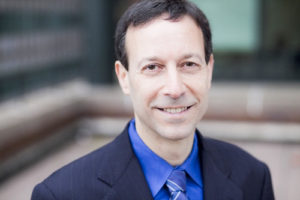
President
Mace News
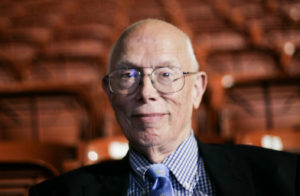
D.C. Bureau Chief
Mace News
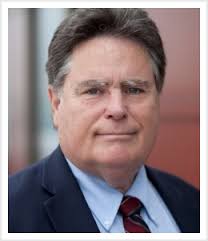
Federal Reserve
Mace News

Reporter and expert on the currency market.
Mace News

Reporter and expert on derivatives and fixed income markets.
Mace News
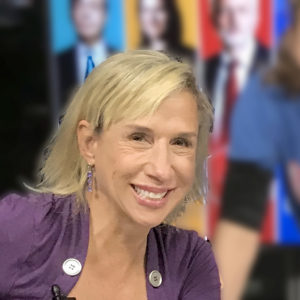
Financial Journalist
Mace News

Reporter, economic and political news.
Japan and Canada
Mace News
By Max Sato
(MaceNews) – Market participants are watching whether Japan’s currency intervention last week will have any lasting effect on keeping dollar bulls at bay amid concerns that rising long-term bond yields triggered by Tokyo’s large fiscal spending plans will spill over to boost borrowing costs in the United States.
Finance Minister Satsuki Katayama declined comment on whether the ministry stepped into the foreign exchange market to buy yen, telling reporters that Japanese officials are “always responding with a sense of urgency.” In recent trading the yen’s value has been drifting down toward ¥164, the lowest in nearly four decades, fueling fears that imports will become even more expensive.
A sudden slump in the dollar from above ¥163 to below ¥160 late on Thursday Tokyo time pointed to rounds of stealth intervention to buy yen, totaling ¥5 trillion to ¥6 trillion, according to news reports. The following day, the dollar picked up briefly but plunged again, this time more sharply to around ¥157.20, indicating further action by the MOF.
The ministry last acted in the forex market from late April to early May, when market conditions were choppy during Japan’s Golden Week holidays. MOF data later showed the massive campaign totaled a record ¥11.74 trillion in yen buying. At the time Katayama and her deputy had warned about imminent intervention. The dollar dipped toward ¥155 from ¥160 but the intervention lost its effect a month later. This time no hints were drop beforehand and there has been no official confirmation afterwards.
Forex traders seem to have taken the message more seriously on Friday as they saw signs that the U.S. Treasury Department is also behind the large-scale dollar selling. U.S. officials wish to keep a lid on bond yields and prevent higher borrowing costs from hurting the economy when they also need to watch rising inflationary pressures. In the Treasury market, 30-year yields surged above 5.25%, a 19-year high, and 10-year yields also rose to 4.73%, the highest since early 2025.
The Financial Times reported on Friday that Washington joined forces to prop up the value of the sinking yen in the forex market, the first such action to support Tokyo since June 1998, when Japan was reeling under the drag from the Asian financial crisis and non-performing loans at Japanese lenders. The last joint action in March 2011 was part of the G7 initiative to slow the yen’s surge in the aftermath of the massive earthquake and tsunami in northeastern Japan that triggered rumours that insurers needed to repatriate large sums of dollars for yen to pay for the damage.
The Federal Reserve Bank of New York undertook the unusual move of conducting a sale of euros to buy yen on behalf of the Treasury, the FT said, quoting unnamed sources who are familiar with the matter.
Reuters also reported on Friday that a photograph taken over the shoulder of U.S. Treasury Secretary Scott Bessent during President Donald Trump’s cabinet meeting at Camp David showed a note that is believed to have been written by Bessent. It said, “To Do, Buy Japanese Yen (JPY) $5 – 10 bil,” which would be ¥788 billion to ¥1.57 trillion.
For its part, the Ministry of Finance appears to be telling intervention skeptics that it has ample ammunition for dollar-selling forex interventions. Normally, Tokyo uses its foreign reserves to try to stop the dollar from rising further, which means there is a limit to how much it can spend unlike its yen-buying operations that are backed by an unlimited supply of the Japanese currency.
“Japan’s monetary authorities have a broad range of tools available to address market liquidity needs,” the MOF’s post on social media said. “These include potential access, as appropriate, to the Federal Reserve’s standing Foreign and International Monetary Authorities (FIMA) Repo Facility, which can provide temporary U.S. dollar liquidity against U.S. Treasury securities. We remain prepared to use available tools as necessary to support orderly market functioning.”
The MOF is not receiving much help from the Bank of Japan at this point as the bank is no hurry to raise interest rates further. In theory, higher interest rates would support the yen but given that U.S. interest rates are much higher, a slight rise in the BOJ’s policy rate would not change the generally strong dollar sentiment.
At this latest meeting on July 30-31, the BOJ’s nine-member board decided to leave the target for the overnight interest rate at 1% in an 8 to 1 vote as the bank is still monitoring the impact of its fifth hike in the current cycle that was conducted last month. The board again vowed to “continue to raise the policy interest rate and adjust the degree of monetary accommodation” in response to developments in growth and inflation. Underlying inflation is nearing the bank’s 2% price stability target and financial conditions are accommodative, it noted.
On the economic date front, in light of resilient exports and industrial production in the second quarter, economists are now forecasting that Japan’s economic growth will accelerate slightly from the first quarter. The tentative median forecast for the Q2 gross domestic product due on Aug. 17 is a solid 0.6% rise on quarter, or an annualized 2.3%, compared to the Q1 growth rates of 0.5% and 1.8%. In early July, before seeing various June economic indicators, economists had predicted that the economic growth would lose some momentum in April-June.
The Japanese auto industry has weathered the impact of high U.S. tariffs while global demand for computer chips and non-ferrous metals remains strong. Domestically, firms are digitizing operations to cope with labor shortages.
Consumers are also seen contributing to the Q2 growth, backed by substantial nominal wage hikes by many firms in the third straight year and on-and-off subsidies to help cap fuel prices and utility bills. There is also a temporary boost to sales of air conditioners before the government applies tighter energy-saving standards in April 2027. The elimination of a special environmental tax on vehicle purchases in March this year has been helping the recent pick-up in demand for automobiles.
Looking ahead, however, the economy is likely to feel some pain arising from last week’s 7.1-magnitude earthquake that shook Kumamoto Prefecture in southwestern Japan, killing 36 people and injuring many more. The powerful quake flattened many homes, caused roads to plunge and warp and cut off electricity and water supply. Aftershocks are lingering and the disaster could cause a supply chain disruption on a national level for growth-leading industries and dent consumer and business sentiment.
Japan’s real average household spending is expected to be nearly flat, up just 0.1% on the year, after falling in the previous six months, as consumers remain cautiously resilient amid elevated costs of food and other essentials. Demand for air conditioners, fans and other seasonal goods remains strong amid hot and humid weather while spending on vehicles and eating out has also been picking up.
The depreciation of the yen has made imports more expensive, continued wage hikes amid labor shortages have prompted many firms to pass higher costs onto retail prices and the Mideast conflict has boosted transportation and packaging costs.
From a month earlier, real average expenditures by households with two or more people are forecast to slump 3.7%, giving up the hefty 3.7% gain in May that sent the seasonally adjusted expenditures index to a 12-month high of 101.7.
On the supply side, retail sales rose 0.5% on the year in June, slowing sharply from a 5.1% rise in May, which was the highest pace since 5.4% in November 2023. Demand for vehicles continued to pick up while typhoon weather and lower temperatures compared to a year earlier dampened sales of all other categories including clothing and appliances such as air conditioners. Government subsidies have put a lid on retail prices of gasoline and diesel, exerting downward pressure on fuel sales.
Industry data showed department store sales posted their sixth straight year-on-year rise June, up 2.3%, but the pace of increase decelerated from 8.3% in May and 5.2% in April in light of rainy and typhoon weather. There was also one less Sundays (four) compared to June last year, which also led sales to domestic customers to mark their first drop in 11 months (-0.2%).
On the upside, the weak yen kept sales to visitors from overseas above year-earlier levels for the fourth consecutive month, up 29.8%, following a 16.7% gain in May. Solid spending by those from Southeast Asia and Europe continue. Even spending by Chinese shoppers rose about 16% to record its first year-on-year increase in seven months, although the number of those from China was still down 25% as many of them are bypassing Japan at the request of Beijing over bilateral diplomatic rows.
Friday, Aug. 7
1400 JST (0500 GMT/0100 EDT Friday, Aug. 7) The Bank of Japan releases June consumption activity index. The supply-side indicator, which has a close correlation with revised GDP data, rose a real 0.6% on the month in May on a travel balance adjusted basis after rebounding 1.7% in April and falling 0.7% in March. The index in the April-May period posted a 1.6% rise on the January-March quarter, when it gained 0.6%.
– Modest Tightening Now Would Avoid Having to Move Aggressively Later, Kashjari and Logan Argue
By Steven K. Beckner
(MaceNews) – The three Federal Reserve bank presidents who voted against the Federal Open Market Committee’s Wednesday decision to leave short-term interest rates unchanged defended their actions Friday.
The three dissenters — Cleveland’s Beth Hammack, Minneapolis’s Neel Kashkari, and Dallas’s Lorie Logan – all argued in separate statements that the rate-setting FOMC needed to take more urgent action to counter “elevated” inflation, given that the economy and labor markets are in good shape and don’t need monetary stimulus.
An immediate modest rate hike would have warded off the potential need to tighten credit more aggressively later, Kashkari and Logan maintained.
With Kevin Warsh in the chair for the second meeting, the FOMC voted 9-3 to leave the federal funds rate in a target range of 3.5% to 3.75%, where it’s been since a 25 basis point December rate cut.
In its boiled down policy statement, the FOMC acknowledged that “inflation remains elevated relative to the Committee’s 2% goal, in part reflecting supply shocks that have driven price increases in certain sectors, including energy.”
Once again, the FOMC declared that it “will deliver price stability.”
Hammack, Kashkari and Logan voted “no” because they “preferred to raise the target range for the federal funds rate by 1/4 percentage point at this meeting,” according to the statement.
Explaining themselves Friday, the three dissenters made similar arguments – essentially that the Fed cannot afford to keep delaying action to combat an inflation that has exceeded the Fed’s 2% target for more than five years, especially since the economy is strong enough to withstand some modest tightening.
The FOMC statement itself suggested as much, calling economic activity “solid” and noting that “the unemployment rate has changed little.”
In that environment, there is no reason to put off rate hikes, the three dissenters contended.
Hammack, who issued the first statement, said “Inflation has been too high for too long. In my view, now is the time for the FOMC to act to speed the return of PCE inflation to our 2% objective and deliver on our commitment to price stability for the American people.”
“The longer that high inflation persists, the more challenging and costly it can be to bring it back down,” she said.
Observing that “inflation has remained stubbornly above 2% for more than five years,” Hammack said she is “not confident it will return to our objective on its own.”
Although energy cost surges and other “supply-side factors,” have boosted inflation, she said she “see(s) inflationary pressures coming from the demand side of the economy, as well.” She cited business leaders in her 4th District who “describe pricing pressures as broadening rather than fading…”
“Given the stability of the labor market, with the unemployment rate near my estimate of maximum employment, I view high inflation as the more pressing problem,” Hammack wrote.
“A higher federal funds rate would help restrain economic activity and reduce inflationary pressures,” she concluded. “I preferred to move at our recent meeting because I did not see the current policy stance as appropriately restrictive.”
Kashkari, who also noted that inflation has exceeded 2% for for more than five years, agreed that “supply shocks” had pushed up prices, but said “the massive investment in data centers has also added a new demand element to the high inflation Americans are experiencing.”
While he “largely subscribe(s)” to the view that central banks should “look through” supply shocks and allow them to pass on their own, he said he “increasingly believe(s) that monetary policy does have an important role to play in addressing a series of successive supply shocks that might lead to entrenched higher inflation.” And monetary policy can restrain demand.
So, Kashkari argued the FOMC needs to get going with monetary tightening, though not aggressively.
“(T)o manage against the risk that high inflation could become entrenched, I would rather tighten policy incrementally as we gather more data on the path of inflation and employment,” he said. “If inflation remains elevated, in my view, a potential series of small policy moves would be better than waiting and eventually concluding that even bolder actions were necessary.”
“On the other hand, if inflation durably fades, a strategy of small policy steps would allow the FOMC to slow or pause subsequent adjustments without unnecessary impact on the real economy,” Kashkari added.
Likewise, Logan maintained that “modest action in the near term would reduce the likelihood of needing to take sharper action later.”
She warned against downplaying or excusing away the long period of high inflation. “Even after accounting for productivity gains and temporary supply shocks, inflation appears to be trending toward the mid-2’s, not all the way to 2%, and the risks are to the upside.”
Noting that the FOMC’s policy framework “calls for a balanced approach to our Congressionally established price stability and maximum employment mandates,” Logan wrote, “To better balance the outlook and risks for the Fed’s dual mandate goals, I would have preferred to increase interest rates by one-quarter percentage point at this week’s meeting.”
Warsh, in his post-FOMC press conference, welcomed the dissents as representing “a good family fight.” He said all FOMC members agree on the need to reduce inflation and repeatedly said the Fed “will deliver.”
For now, he said the rise in bond yields was helping the Fed tighten financial conditions without the Fed having to raise the funds rate. He insisted the FOMC’s stand pat stance on Wednesday did not represent “inertia” and vowed it will act if needed.
Three FOMC dissents are unusual, but not unprecedented. There were also three dissents at the December meeting, when the FOMC concluded a series of rate cuts, But then the dissenters diverged, with one (Gov. Stephen Miran) preferring a larger 50 basis point rate cut) and two (Chicago Fed President Austan Goolsbee and Kansas City Fed President Jeffrey Schmid) wanting no rate change.
– Warsh Welcomes Rising Bond Yields as Aiding Fed Inflation Fight
– Warsh Downplays Dissents; Says Committee United on ‘Delivering’ 2% Inflation
By Steven K. Beckner
(MaceNews) – The Federal Reserve’s policymaking Federal Open Market Committee left short-term interest rates unchanged Wednesday for the fifth straight meeting, but the Fed’s rate-setting body was sharply divided, with an unusual threesome of dissents in favor of higher rates.
Disappointing speculation by some on Wall Street that the Kevin Warsh-led Fed might spring a surprise rate hike to prove his commitment to price stability, the FOMC left the federal funds rate in a target range of 3.5% to 3.75%, where it’s been since December when the FOMC completed a series of rate cuts.
No less than three Federal Reserve Bank presidents — Cleveland’s Beth Hammack, Minneapolis’s Neel Kashkari, and Dallas’s Lorie Logan – voted against holding the policy rate steady. Those three FOMC members “preferred to raise the target range for the federal funds rate by 1/4 percentage point at this meeting,” according to the statement. All members of the Board of Governors voted to hold rates steady.
However, Warsh insisted that the split vote did not indicate disunity on the Fed’s main objective, which he repeated is to “deliver” on the Fed’s “price stability” mandate. Moreover, he stressed, the FOMC’s inaction Wednesday should not be taken as a sign of “inertia.” Though it did not raise rates immediately, that is “not the end of the story,” he said.
In his second post-FOMC press conference since succeeding Jerome Powell as Fed chair on May 22, Warsh welcomed the “rigorous discussion” the 19-member Committee had had over the past two days, calling it “a good family fight.”
Warsh also welcomed what he called the “material” increase in market interest rates in recent weeks, suggesting that the bond markets were helping the Fed do its anti-inflation job by “tightening” financial conditions. And he maintained markets were demonstrating confidence that the FOMC “will deliver” on its commitment to bring inflation down to 2%.
As with its June 17 policy statement, the first issued under Warsh’s direction, the FOMC kept it simple. Once again there was none of the old “forward guidance” – no hint of what direction rates are most likely to go in coming months.
The succinct statement reiterated that “economic activity is expanding at a solid pace despite elevated uncertainty that owes, in part, to the conflict in the Middle East. Productivity growth and capital investment are strong.”
“Job gains have kept pace with the workforce, and the unemployment rate has changed little,” it continued.
The statement again said that “inflation remains elevated relative to the Committee’s 2% goal, in part reflecting supply shocks that have driven price increases in certain sectors, including energy.”
And it added a now familiar pledge: “The Committee will deliver price stability.”
There was no fresh set of rate projections and economic forecasts, since the next quarterly Summary of Economic Projections cum “dot plot” is not scheduled for release until the Sept. 15-16 FOMC meeting (presuming the reform-minded Warsh wants to perpetuate its publication).
The FOMC convened against a backdrop of re-escalating war in the Middle East and renewed upward pressure on oil prices.
Since the mid-June FOMC meeting, a smaller than expected June rise in the consumer price index and an oil price retreat served for a time to lessen inflation fears, but Warsh told the House Financial Services Committee after the CPI report on July 14 that he was not inclined to “cherry pick” favorable monthly data. What ‘s more, on the eve of Wednesday’s meeting oil prices rebounded sharply after a resumption of hostilities with Iran, which seems likely to push gasoline prices higher.
A June reading on the price index for personal consumption expenditures (PCE), due Thursday, is expected to show some moderation from May’s 4.1% year-over-year reading, but clearly Fed policymakers remain concerned and uncertain about the inflation outlook, we well as about inflation expectations.
Although the FOMC did not change monetary policy at this meeting, Warsh was determined that reporters not get the impression that nothing is happening in the war against inflation or that the
Fed is unwilling to take action after it has been running above target for more than five years.
“Though we haven’t done anything, the markets have done quite a bit,” he said, pointing to an increase in both nominal and real yields “across the Treasury curve.”
Warsh saw the yield spike, which he called “among the most significant in the last two decades,” a healthy development that reflects a new, evolving relationship between the market and a central bank that is no longer sending advance policy signals.
“In the intervening period, market attention centered on real data and real economic developments,” he explained. “Prices reacted in real time to incoming information, and the reduction in forward guidance may have been a factor.”
“Market participants are learning to play the ball, not the referee, and market prices will continue to respond in the direction and magnitude they see fit,” Warsh continued. “This is, in my view, a change for the better, and we’re just getting started.”
The Fed chief also claimed that financial markets are giving the Fed a vote of confidence.
“What we do isn’t just about what we say,” he said. “It’s not just about what we do.”
“We’re in the performance business and so if I look at the Treasury curve, if I look at the dollar, if I look at a lot of things that are internals inside of financial markets, I think what they’re broadly saying is, that this Committee does own it,” Warsh continued. “It has the credibility to deliver it, and they believe, like I do, that we will, but I don’t want to leave you with a missed impression.”
While refusing to hint at when the FOMC might raise rates, Warsh made clear he and his colleagues are prepared to do so if needed to ensure that the recent, more favorable inflation trend continues.
Objecting to characterizations of the Fed’s inaction as passive or as “tolerant” of high inflation, he said “this is a period of watchful thinking, not watchful waiting.”
Nor is the FOMC in “a pause,” as one reporter described the current state of monetary policy, Warsh declared.
“I wouldn’t characterize what we did is anything like a pause,” he said. “I would characterize what we did as a rigorous review of the economic situation. I would characterize what we did as a review of the big, hard questions, and I’d characterize it as a view of what our own homework is, to try to resolve those questions and the period ahead.”
“If you were to try to force a description that this was a pause, I would say financial market prices would take the other side of that,” he went on. “Financial market prices, in this intervening period, they didn’t pause. They reacted to the inflation data in one direction, strong economic growth in the other direction, and nominal and real rates went up.”
“Did the Fed take an explicit change in its policy rate today?” Warsh rhetorically asked.
“No, but I think that’s the beginning of the story, not the end of the story,” he answered.
In a further effort to disabuse impressions that the FOMC is moving too slowly against inflation, Warsh told reporters, ‘We have spent an inordinate amount of time in the last two days, two weeks, looking at our monetary policy strategy, evaluating our tools, thinking hard about the sources of data that we have at our disposal, and we wish we had.”
“We’ve also thought hard about the period ahead,” he said. “What among these questions will be answered, with more clarity, certainly not certainty. So, the decision we’ve made today, the discussion we had in that room, was the farthest thing from inertia I can imagine.”
Warsh added that Wednesday’s discussion “was far more robust and our thinking about how best to achieve that target is advanced and over the coming months I expect it to be advanced much more significantly.”
He acknowledged that there is “impatience” among households and businesses” to reduce inflation but pointed out that his tenure as Fed chair is only “eight and a half weeks” old.
“We are on-the-job, we will deliver, we are focused like a laser on making sure we can do it,” he declared. “But the suggestion that we’re going to be able to do it with our magic wand is one I want to disabuse you and everyone else of, but the discussion the last two days give me more confidence even than I had eight and a half weeks ago.”
“This team that we have at the FOMC, the support that we have from board staff, and the new hard questions we’re asking, we need to resolve those and as we resolve those questions get smarter on those, we’re going to deliver on the remit,” he added.
And again, Warsh pointed to bond yields. “ If you look broadly at market prices, they are certainly not saying “all clear” but they are working in concert to keep us on our toes and they have tightened financial conditions in this inter meeting period and that has given us, that has provided us some comfort that we’ve got the ability and capability to deliver.”
Although three FOMC members dissented, Warsh said the committee is “unanimous” in its determination to achieve price stability, as indeed minutes of the June FOMC meeting also showed.
“The way I heard it over the last two days was overwhelming agreement on objectives and authority and commitment,” he said. “I didn’t hear anybody walking away from it.”
“The judgments as to how best to achieve the price stability, that was probably the question we’re trying to answer,” Warsh elaborated. “What’s the best move? What’s the best strategy? What’s the best way to achieve it?”
“And a second question that was asked is when do we need to make those harder calls?” he continued. “When do we need to make those decisions, and …. I was comforted that markets in the intermeeting period weren’t reacting to us, they weren’t reacting to dots or to speeches. They appeared more than ever to be reacting to real time events so they’re gauging themselves how restrictive the Treasury curve should be and that I think has been a useful development.”
As shown by the three dissents; by the June SEP, and by the minutes of the June FOMC meeting, Fed policymakers are sharply divided.
Those divisions were on display in the lead-up to this week’s meeting. Before the pre-meeting blackout, comments by officials showed continued divergences of opinion, although they were still largely weighted toward concerns about inflation, with some explicitly supporting tighter monetary policy to address them.
One of the more hawkish was Gov. Lisa Cook who two weeks ago said she saw “a notable shift in the balance of risks relative to a year or so ago, with inflation risks now outweighing employment risks.” After saying she “believe(s) the risks continue to be strongly weighted toward higher inflation…” she warned, “If we do not see signs of disinflation soon, I am prepared to act. I am fully committed to reaching our inflation target, and this commitment is unwavering.”
Logan telegraphed her dissent the next day, Thursday, July 16, declaring, “I currently believe modestly higher interest rates would better balance the outlook and risks for the FOMC’s maximum employment and price stability goals.”
Hammack, a fellow dissenter, said the same day that “the labor market is right around my level of maximum employment,’ while “persistently high inflation is the bigger concern.”
Kansas City Fed President Jeffrey Schmid echoed those sentiments: “I believe the labor market is in balance and growth remains resilient. My primary concern is inflation, which is too hot and has been above target for too long. As such, my focus remains on inflation in setting the correct course for policy.”
Fed Board Vice Chairman Phillip Jefferson, who voted to hold rates steady, indicated a potential willingness to support future rate hikes: “(I)n a scenario where actual inflation does not start to cool down soon, I believe that it could be appropriate to reconsider our current policy stance to ensure we fulfill our commitment to deliver price stability.”
On the other hand, New York Fed President John Williams, the FOMC vice chairman, gave no indication he is prepared to raise rates any time soon in a Wednesday, July 15 speech.
While saying that “inflation is unquestionably too high at about 4%,” the FOMC vice said, “there are encouraging reasons to expect that inflation has peaked and should edge down in coming quarters.” And, as he has before, Williams said monetary policy is “well-positioned” to achieve that Fed’s goals of maximum employment and price stability.
Friday, Aug 7, 20260830 JST (2350 GMT/1930 EDT Thursday, Aug 6) The Ministry of Internal Affairs and Communications releases the June average household spending.Mace News
–ISM’s Spence: Sentiment Trending Up in Right Direction; Slower Deliveries Could Get Worse but Orders Still Flowing By Max Sato (MaceNews) – U.S. manufacturing activity
By Max Sato (MaceNews) – Market participants are watching whether Japan’s currency intervention last week will have any lasting effect on keeping dollar bulls at
– Modest Tightening Now Would Avoid Having to Move Aggressively Later, Kashjari and Logan Argue By Steven K. Beckner (MaceNews) – The three Federal Reserve
– Warsh Welcomes Rising Bond Yields as Aiding Fed Inflation Fight – Warsh Downplays Dissents; Says Committee United on ‘Delivering’ 2% Inflation By Steven K.
WASHINGTON (MaceNews) – The following is a rough transcript of Federal Reserve Chair Kevin Warsh’s answers to reporters’ questions after the Federal Open Market Committee’s
Friday, July 31, 2026 0830 JST (2330 GMT/1930 EDT Thursday, July 30) The Ministry of Internal Affairs and Communications releases July Tokyo CPI.Mace News median:
WASHINGTON (MaceNews) – The following is the text of the Federal Open Market Committee policy statement issued a short time ago Wednesday afternoon:The Federal Open
Contact Mace News President
Tony Mace tony@macenews.com
to find a customer- and markets-oriented brand of news coverage with a level of individualized service unique to the industry. A market participant told us he believes he has his own White House correspondent as Mace News provides breaking news and/or audio feeds, stories, savvy analysis, photos and headlines delivered how you want them. And more. And this is important because you won’t get it anywhere else. That’s MICRONEWS. We know how important to you are the short advisories on what’s coming up, whether briefings, statements, unexpected changes in schedules and calendars and anything else that piques our interest.
No matter the area being covered, the reporter is always only a telephone call or message away. We check with you frequently to see how we can improve. Have a question, need to be briefed via video or audio-only on a topic’s state of play, keep us on speed dial. See the list of interest areas we cover elsewhere
on this site.
—
You can have two weeks reduced price no-obligation trial for $199. No self-renewing contracts. Suspend, renew coverage at any time. Stay with a topic like trade while its hot and suspend coverage or switch coverage areas when it’s not. We serve customers one by one 24/7.
—
Tony Mace was the top editorial executive for Market News International for two decades.
Washington Bureau Chief Denny Gulino had the same title at Market News for 18 years.
Similar experience undergirds our service in Ottawa, London, Brussels and in Asia.