
Contact Mace News President
Tony Mace tony@macenews.com
to find a customer- and markets-oriented brand of news coverage with a level of individualized service unique to the industry. A market participant told us he believes he has his own White House correspondent as Mace News provides breaking news and/or audio feeds, stories, savvy analysis, photos and headlines delivered how you want them. And more. And this is important because you won’t get it anywhere else. That’s MICRONEWS. We know how important to you are the short advisories on what’s coming up, whether briefings, statements, unexpected changes in schedules and calendars and anything else that piques our interest.
No matter the area being covered, the reporter is always only a telephone call or message away. We check with you frequently to see how we can improve. Have a question, need to be briefed via video or audio-only on a topic’s state of play, keep us on speed dial. See the list of interest areas we cover elsewhere
on this site.
—
You can have two weeks reduced price no-obligation trial for $199. No self-renewing contracts. Suspend, renew coverage at any time. Stay with a topic like trade while it’s hot and suspend coverage or switch coverage areas when it’s not. We serve customers one by one, 24/7.
—
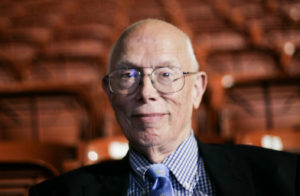
Tony Mace was the top editorial executive for Market News
International for two decades.
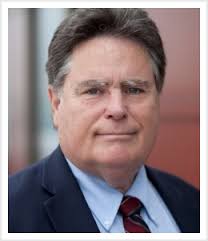
Washington Bureau Chief Denny Gulino had the same title at Market News for 18 years.
Similar experience undergirds our service in Ottawa, London, Brussels and in Asia.

President
Mace News
D.C. Bureau Chief
Mace News
Federal Reserve
Mace News

Reporter and expert on the currency market.
Mace News

Reporter and expert on derivatives and fixed income markets.
Mace News
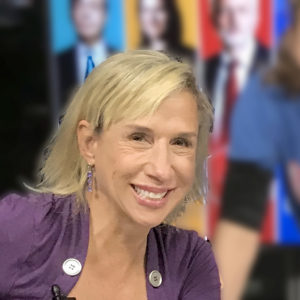
Financial Journalist
Mace News

Reporter, economic and political news.
Japan and Canada
Mace News
Monday, August 31, 2026
0850 JST (2350 GMT/1950 EDT Sunday, August 30) The Ministry of Economy, Trade and Industry releases July industrial production, the outlook for August and September.
Mace News median: -0.6% m/m (range: -1.4% to +1.3%) vs. June revised to +1.9% from +1.3%; +3.6% y/y (range: +2.6% to +5.4%) vs. June revised to +4.9% from +4.2%
By Chikafumi Hodo
TOKYO (MaceNews) – Japan’s industrial output is expected to edge lower on the month in July amid a pullback from a relatively strong increase the previous month. Output is seen falling for the first time in four months, but it is expected to remain supported by gains in exports amid steady global demand, particularly for artificial intelligence-related products, backed by healthy underlying business sentiment around the world.
Some concerns over the outlook for the Japanese economy intensified after capital expenditure in the April-June quarter of gross domestic product came in below expectations, but domestic factory output is expected to maintain the uptrend that began in April. Although geopolitical tensions in the Mideast remain, production in the manufacturing sector has maintained its solid footing as global demand for AI-related products remains strong.
Industrial output is expected to fall 0.6% on the month in July, following a 1.9% increase in June, which was upwardly revised from 1.3%. On a year-on-year basis, production is expected to increase 3.6% in July after falling a revised 2.1% in June, marking the first rise in two months.
The Ministry of Economy, Trade and Industry maintained its assessment that industrial output was “taking one step forward and one step back.” The last change was made in the July 2024 report, when it upgraded its view. The ministry’s forecast index showed that July output, adjusted for upward bias, will fall 0.7% on the month, while August output will rise 4.5%.
June output was revised upward, while the food and tobacco industry was added to the list of industries posting increases, bringing the number to 14 out of 16. In addition to food and tobacco, production machinery, such as chipmaking equipment, and electrical and information & communication machinery, including equipment used to make laptop computers, posted solid gains.
The uptrend in industrial output is underscored by record-high July exports, which were announced earlier this month amid robust semiconductor-related demand and strong automobile exports. Japanese exports increased for an 11th straight month in July, led by strong global demand. Exports to the U.S. have increased for five straight months, led by automobiles, even as the country has imposed stiff tariffs since February last year.
Monday, August 31, 2026
0850 JST (2350 GMT/1950 EDT Sunday, August 30) The Ministry of Economy, Trade and Industry releases July retail sales.
Mace News median: +2.5% y/y (range: +1.3% to +3.4%) vs. June revised to +0.6% from +0.5%; +1.6% m/m (range: +0.8% to +1.8%) vs. June revised to -3.9% from -4.1%
By Chikafumi Hodo
TOKYO (MaceNews) – Intensifying inflationary pressure is expected to keep Japanese retail sales on an uptrend for a fifth consecutive month in July, with department store and auto sales showing signs of strength despite signs of a slight slowdown in gasoline and other fuel prices.
Retail sales are expected to rise 2.5% on the year in July, up from a revised 0.6% a month earlier, previously reported as 0.5%. The June figure came below expectations as lower temperatures compared with a year earlier dampened sales across a range of categories, including clothing and appliances such as air conditioners. Government subsidies have capped retail prices of gasoline and diesel, exerting downward pressure on fuel sales.
The Ministry of Economy, Trade and Industry maintained its assessment after upgrading it last month, saying retail sales are “on a gradual uptrend.”
On a month-on-month basis, retail sales are projected to rise 1.6% in July following a revised 3.9% fall in June from the initial 4.1% fall.
– Warns Expectations Could Become Unanchored if Inflation Stays Elevated
– Reaffirms that the Fed’s Job Is To ‘Deliver Stable Prices’
– Sees Labor Markets, Economy Performing Strongly Without Financial Restraint
– Says Inflation ‘Has Not Meaningfully improved’
– Again Rejects ‘Forward Guidance’ Or Revealing Fed ‘Reaction Function’
By Steven K. Beckner
(MaceNews) – Although he stopped well short of signaling a near-term interest rate increase Friday, Federal Reserve Chair Kevin Warsh came down heavily on the side of doing what needs to be done to reduce inflation and to keep inflation expectations “well anchored.”
The inference could be made that a hike in the key federal funds rate will be very much on the table when the Fed’s rate-setting Federal Open Market Committee meets in mid-September.
Warsh, keynoting the Kansas City Federal Reserve Bank’s annual Jackson Hole, Wyoming Symposium for the first time, pointed to strength in labor markets and the economy generally, but expressed strong concern that inflation remains “quite elevated” and warned inflation expectations could begin to deteriorate if action is not taken to reduce inflation to the Fed’s 2% target.
As has become customary since he succeeded Jerome Powell on May 22, he declared that he and his FOMC colleagues are committed to “deliver stable prices.”
Although inflation data in recent months have moderated somewhat, Warsh expressed dissatisfaction, saying, “they do not tell me that underlying trends have meaningfully improved.”
And he stressed the importance of guarding against an inflationary psychology taking hold in the public and in financial markets. Inflation expectations could unravel without notice, he warned.
In keeping with the principles he has laid down since becoming Fed chair, Warsh again inveighed against so-called “forward guidance” on monetary policy and also rejected calls for the Fed to reveal its “reaction function.”
Without commenting directly on recent efforts by Treasury Secretary Scott Bessent to manipulate bond yields, he cautioned against the use of “unconventional” policies to override financial market pricing.
Warsh was speaking before chairing his third FOMC meeting Sept. 15-16 when it will gather to take fresh stock of the economy and set short-term interest rates. The Committee will also publish a revised set of economic forecasts and federal funds rate projections.
Many FOMC participants were listening to his presentation in the shadows of the Grand Tetons.
Since completing a series of rate cuts totaling 175 basis points over 15 months last December, the FOMC has held the funds rate in a target range of 3.50% to 3.75%.
In years past, previous Fed chairs have sometimes used the Jackson Hole keynote speech to set the stage for major policy decisions or shifts.
Warsh, who attended many Jackson Hole symposiums while serving as a member of the Fed Board of Governors 2006-11, took a middle course, mixing in economic comments having potential policy implications with a more broad-based observations, as well as a set of principles that will guide his stewardship of the central bank.
On the economy, he largely reiterated what the FOMC said in its July 29 policy statement.
“I am impressed by the overall performance of the economy, which appears to have strengthened,” he told an audience that included many FOMC participants as well as top central bankers from around the world.
Warsh noted that business capital expenditures “are rising rapidly” and that “real consumer spending has been healthy despite the shocks.”
He saw no sign that economic activity is being restrained financially. Noting that “credit spreads on corporate bonds and leveraged loans are near the low ends of their historical ranges, and issuance volumes in these markets have been quite strong this year,” he said he “would be hard pressed to describe broad financial conditions as restrictive.”
As for employment, Warsh said “our country is doing well. Labor markets are quite stable. The jobless rate, at 4.1%, remains low by historical standards and has not changed much for a couple of years. Unemployment claims, on a four-week average—an empirically robust real-time indicator—are near their lowest level in decades.”
However, shifting to inflation, Warsh abruptly turned gloomy.
“(O)n the price-stability side of our mandate, the numbers are more concerning,” he said, pointing to the 3.7% year-over-year rise in the price index for personal consumption expenditures, the Fed’s preferred inflation gauge, in July and noting that over the past six months the increase was 4.1%.
Warsh said he and his fellow policymakers have been trying “to capture underlying trend inflation …. whether underlying inflation is rising, falling, or stuck in place.”
From that perspective, inflation “has fallen significantly from their 2022 heights,’ he said. “But progress over the past two years has been modest.”
“And while this summer’s PCE and CPI readings were better than expected, they do not tell me that underlying trends have meaningfully improved,” Warsh added.
Disaggregating the 199 individual components of the PCE price measure, he pointed out that over the past 12 months, 54% of goods and services showed price increases above 3%. And over the past six months, he noted, 49% of goods and services showed annualized price increases above 3 percent.
“(T)his is well below the post-pandemic highs but still quite elevated,” Warsh said, adding that “the recent rise in overall commodity prices also bears watching.”
Turning to inflation expectations, he said they “by and large, look stable” and called that is “a credit to the Fed as an institution.”
But Warsh added a stark warning: “The thing about market measures of inflation expectations in economic history is that they tend to look strong and durable until they don’t.”
“(R)ight now (inflation expectations) are well anchored,” he continued. “But they must be closely minded. It’s the Fed’s job to make sure that inflation expectations do not get unanchored.”
Warsh then gave symposium attendees his portentous “standard”: “We must be confident that underlying inflation is moving to our objective, clearly and at sufficient speed. Otherwise, we have work to do. That’s our job . . . our mandate . . . and our charge to keep.”
The theme of this year’s symposium is “Financial Innovation: Implications for Payments and Policy,” and Warsh observed that “times sure have changed” since earlier in the 21st century when economists were talking about “secular stagnation.”
“We’ve come to a hinge point in history,’ he said, pointing to the eruption of artificial intelligence development and its “potential for substantially higher growth” and greater productivity.
“The Fed watches all of this attentively,” Warsh said. “We recognize that AI is a new variable—potentially a new factor of production—that will have consequences for both the economy and the conduct of monetary policy.”
He said AI “opens some major lines of inquiry: Will the application of AI cause a significant, sustained rise in productivity across the economy? And if so, when?”
One of the five task forces Warsh has created is devoted to AI and its impact on productivity, and he said its early findings “have been encouraging.” But he said “their recommendations will come later and have no bearing on decisions we make in the current policy conjuncture.”
To prepare for future policy challenges, Warsh laid down some markers, including in the area of Fed communication – the remit of another Fed task force. Here he reiterated his well-known “discomfort with early pronouncements of future policy decisions,” i.e. “forward guidance.”
“In normal times, the role of forward guidance should be limited and circumscribed,” he elaborated. “Otherwise it risks creating ambiguity in the name of clarity. Oversharing policy deliberations and over-committing to future decisions can lead markets, businesses, and households astray. And I believe when policymakers make quasi-commitments on interest rates through the cycle, we inhibit our own freedom to make the right calls when it’s time to decide.”
“To get policy right, we also need to get the relationship right between financial markets and the central bank,” Warsh went on. “The Fed needs clear market signals, as unfiltered as possible…”
He said asset prices, “the prices and trading volumes of Treasury securities,” the value of the dollar, the cost and availability of credit and commodity prices “should inform the Fed’s near-term outlook on economic activity and inflation throughout the business cycle” And “they should also reveal the state of broader financial conditions…”
Meanwhile, Warsh said “market participants themselves should be tracking real information across the economy” and “should draw their own conclusions; form their own expectations of output, employment, and inflation; and stay sharply attuned to risks.”
If market participants instead focus on what the Fed is saying and the signals it is sending, he said it leads to “a hall-of-mirrors problem. If markets rely materially on the Fed’s guidance and the Fed relies on market prices, we are all more likely to be blinded to new developments . . . more likely to be caught unprepared for a turn of events . . . and more likely to commit errors in policymaking.”
If the Fed won’t use “forward guidance,” couldn’t it at least tell Wall Street its “reaction function?” Warsh asked, referring to calls for him to do so. His answer was that he’s not willing to do that either.
“I wish our understanding of the economy were so precise as to provide a mechanical, tried-and-true answer—that some simple function like a Taylor rule could be rigorously relied upon,” he said. “But our knowledge just doesn’t extend that far—at least not yet—and the factors most relevant to the proper conduct of monetary policy change over time. Providing forecasts to illustrate the Fed’s reaction function works better in theory than in practice…”
Adding to the swirl of anticipation ahead of the symposium has been developments in the bond market. After becoming chair, Warsh spoke fervently about his desire to see interest rates governed by financial markets in response to economic data.
But after a period of rising bond yields that pushed up politically sensitive mortgage rates, Treasury Secretary Scott Bessent launched a program of longer term Treasury buybacks, which he himself called a program to “twist” the yield curves lower in conjunction with expanded sales of short-term securities.
Bessent seemed to be referring to the “Operation Twist” that was conducted by the Fed in 1961 — selling short-term debt and buying back long-term debt in an effort to lower longer term rates and flatten the yield curve. Though the program was heavily criticized, the Fed gave it another whirl after the Great Financial Crisis in conjunction with large-scale asset purchases (“quantitative easing”).
Warsh did not directly react to Bessent’s buybacks, but one of his comments could be interpreted as critical: “Unconventional policies to spur economic activity may suit genuine crises but should otherwise be used sparingly, if at all.”
He made the comment in the context of a set of “key principles,” one of which was that Fed changes in short-term interest rates should be the primary tool of influencing the economy.
Among his other principles, Warsh said the Fed:
– should realize that “the Fed’s job to deliver stable prices”;
– should not make policy decisions on the basis of “stale or inaccurate data. Nor should we rely on isolated data points”;
– should “ensure that the aggregate demand side of the economy is broadly consistent with aggregate supply,” while recognizing that “evaluating the current and expected balance between aggregate supply and demand is imprecise”;
– should understand that the two sides of the Fed’s mandate (maximum employment and price stability) are “not an either/or proposition. I do not believe that the Fed’s dual mandate works at cross-purposes”;
– should realize that “money matters. It’s not fashionable these days, but my view is that money has something important to do with monetary policy. We should pay attention to money created by the central bank and money that comes from the banking and financial systems,” and
– “a quieter Fed, more purposeful in its communications, is better able to meet its objectives. And we can be held accountable for delivering on our remit—the only true test of our credibility.”
On the eve of the symposium, host Kansas City Fed President Jeffrey Schmid reiterated his determination to beat down inflation, declaring it is “still stubborn and it’s still sticky and we’ve got to continue to find ways to break through.”
Schmid strongly suggested in a CNBC appearance Thursday that the FOMC needs to raise rates, although he said it needs “a little more information” before making such a decision next month. Having called the 3.5-3.75% funds rate setting “very accommodating” the day before,
“I don’t know what we’re restricting currently with the rate policy that we’re at today,” he said.
Although he didn’t specifically call for a Sept. 16 rate hike, Schmid recalled Wednesday that he dissented against rate reductions as an FOMC voter late last year and said, “I’m still consistent with [that.”
Cleveland Fed President Beth Hammack, one of three Federal Reserve Bank Presidents who dissented in favor of raising rates on July 29, said Thursday she didn’t “want to prejudge anything,” but added, “ believe now is the time to act” to curb inflation.
Based on input from business contacts in her industrialized fourth district, she told CNBC, “we’re starting to get some of that inflationary mindset,” and she added, “that’s what I want to make sure we avoid.”
Chicago Fed President Austan Goolsbee also warned about the inflation threat on Thursday. “Everybody should be on edge,” he said on a Rapid Response podcast. “We hear a lot about affordability and we better be mindful because if inflation starts going up again, it’s very hard to get rid of it.”
Earlier in the week, other Fed officials voiced at least conditional support for higher rates.
Boston Fed President Susan Collins, in an essay released Tuesday, said that “maintaining the current federal funds rate target range will require continued evidence that inflation is indeed coming down.”
“Without such evidence, it will be more difficult to rule out other inflationary forces being at play – including the possibility that firms’ price-setting behavior has become inconsistent with 2% inflation,” Collins continued, adding, “Should evidence of sustained inflation progress not materialize, I believe it will be appropriate to tighten policy soon to ensure we deliver price stability in a reasonable time frame.”
The latest comments came after the Fed received relatively unfavorable inflation news on Wednesday, as the Commerce Department announced that its price index for personal consumption expenditures rose by a more-than-expected 3.7% from a year earlier in July. The “core” PCE, the Fed’s favorite inflation gauge, was up 3.3%.
Both measures registered the same as in June, but, as Warsh implied, they failed to show hoped-for progress, heightening speculation that the FOMC may raise rates on Sept. 16.
– Key Inflation, Other Data Eagerly Awaited Before Some Make Up Their Minds By Steven K. Beckner (MaceNews) – With barely two weeks to go
–ISM’s Spence Sees Positive Sentiment in Employment Start to Deteriorate in August–Spence: Prolonged Trade Uncertainty Can Delay Orders, Increase Price Pressures By Max Sato (MaceNews)
Monday, August 31, 2026 0850 JST (2350 GMT/1950 EDT Sunday, August 30) The Ministry of Economy, Trade and Industry releases July industrial production, the outlook
Monday, August 31, 2026 0850 JST (2350 GMT/1950 EDT Sunday, August 30) The Ministry of Economy, Trade and Industry releases July retail sales. Mace News
– Warns Expectations Could Become Unanchored if Inflation Stays Elevated – Reaffirms that the Fed’s Job Is To ‘Deliver Stable Prices’ – Sees Labor Markets,
–July Factory Output to Show Pullback After Recent Gains, Heat Wave Props Up Retail Sales, Sluggish Household Spending Continues amid High Costs By Max Sato
–Government to Watch Drag from Powerful Earthquake That Hit Southwestern Region Last Month as Well as Inflationary Effects of Middle East Conflict By Max Sato
By Steven K. Beckner (MaceNews) – Boston Federal Reserve Bank President Susan Collins is willing to support an increase in short-term interest rates if forthcoming
Contact Mace News President
Tony Mace tony@macenews.com
to find a customer- and markets-oriented brand of news coverage with a level of individualized service unique to the industry. A market participant told us he believes he has his own White House correspondent as Mace News provides breaking news and/or audio feeds, stories, savvy analysis, photos and headlines delivered how you want them. And more. And this is important because you won’t get it anywhere else. That’s MICRONEWS. We know how important to you are the short advisories on what’s coming up, whether briefings, statements, unexpected changes in schedules and calendars and anything else that piques our interest.
No matter the area being covered, the reporter is always only a telephone call or message away. We check with you frequently to see how we can improve. Have a question, need to be briefed via video or audio-only on a topic’s state of play, keep us on speed dial. See the list of interest areas we cover elsewhere
on this site.
—
You can have two weeks reduced price no-obligation trial for $199. No self-renewing contracts. Suspend, renew coverage at any time. Stay with a topic like trade while its hot and suspend coverage or switch coverage areas when it’s not. We serve customers one by one 24/7.
—
Tony Mace was the top editorial executive for Market News International for two decades.
Washington Bureau Chief Denny Gulino had the same title at Market News for 18 years.
Similar experience undergirds our service in Ottawa, London, Brussels and in Asia.